A consistent evening routine is one of the most effective ways to improve sleep quality. The body and mind respond to predictable cues that signal the transition from daytime activity to nighttime rest. When these cues are repeated regularly, falling asleep becomes easier, sleep tends to be deeper, and waking feels more refreshed. Creating a thoughtful wind-down period does not require elaborate rituals. Simple, evidence-supported habits practiced in the hour or two before bed can make a meaningful difference in how well a person sleeps.
Establish a Consistent Sleep Schedule
The foundation of better sleep is regularity. Going to bed and waking up at approximately the same times every day, including weekends, helps stabilize the body’s internal clock. This consistency strengthens the natural sleep-wake cycle and makes it easier to feel sleepy at the desired bedtime. Choosing a realistic bedtime that allows for sufficient rest—most adults need seven to nine hours—and protecting that window is more effective than attempting to compensate with irregular late nights and long lie-ins.
Begin the Wind-Down Period Early
Sleep does not begin the moment the lights go out. The process of transitioning into rest starts earlier in the evening. Setting aside thirty to sixty minutes before the target bedtime for calming activities gives the nervous system time to shift out of alert mode. During this period, stimulating tasks such as work emails, intense discussions, or vigorous exercise are best avoided. The goal is to create a gradual descent into relaxation rather than an abrupt stop.
Limit Exposure to Screens and Bright Light
Electronic devices emit blue light that can interfere with the body’s production of melatonin, the hormone that promotes sleepiness. Reducing screen time in the final hour before bed supports natural melatonin release. When screens must be used, lowering brightness, enabling night mode or blue-light filters, and keeping devices at a greater distance can lessen the impact. Dimming household lights during the evening further reinforces the signal that night is approaching.
Choose Calming Activities
Several low-stimulation activities help prepare the mind and body for sleep. Reading a physical book or magazine under soft light provides gentle mental engagement without the alerting effects of screens. Listening to quiet music, a calm podcast, or nature sounds can ease mental tension. Gentle stretching or simple yoga poses release physical tightness accumulated during the day. Deep breathing exercises or progressive muscle relaxation systematically reduce muscle tension and quiet racing thoughts.
Journaling offers another useful tool. Writing down lingering worries, tomorrow’s tasks, or a few positive reflections can clear mental clutter and reduce the tendency to ruminate once in bed. A warm bath or shower taken about an hour before bedtime raises body temperature slightly; the subsequent cooling that occurs afterward mimics the natural temperature drop that accompanies sleep onset and can promote drowsiness.
Pay Attention to Food and Drink
What is consumed in the evening influences sleep. Large or heavy meals close to bedtime can cause discomfort and disrupt rest. If hunger arises, a light snack that combines complex carbohydrates with a small amount of protein is generally better tolerated. Caffeine has a long half-life and can remain active in the system for many hours; avoiding it in the afternoon and evening protects sleep quality for most people. Alcohol may initially produce drowsiness but tends to fragment sleep later in the night and reduce overall restfulness. Limiting fluids in the final hour can also minimize sleep interruptions caused by the need to use the bathroom.
Optimize the Sleep Environment
The bedroom itself should support rest. A cool room temperature, typically in the mid-to-upper sixties Fahrenheit for many people, aligns with the body’s natural preference for sleep. Darkness is equally important; blackout curtains, an eye mask, or covering small light sources help maintain a sleep-friendly environment. Reducing noise with earplugs, a white-noise device, or a fan can prevent disruptions. Keeping the bed reserved primarily for sleep and intimacy strengthens the mental association between the bed and rest.
Create a Simple, Repeatable Sequence
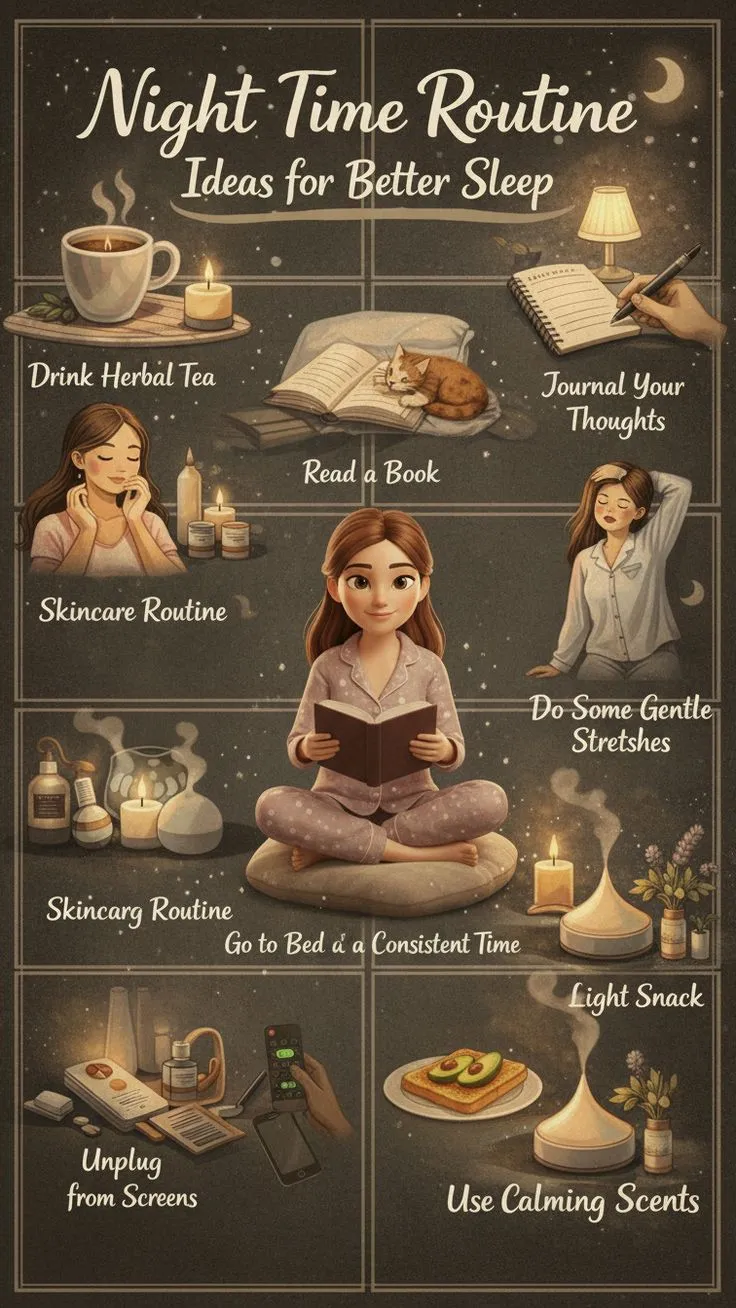
An effective evening routine does not need many steps. A practical sequence might include finishing dinner a few hours before bed, dimming lights, putting devices away, taking a warm shower, doing light stretching or breathing exercises, reading for a short time, and then getting into bed at the planned hour. Performing the same actions in roughly the same order each night strengthens the conditioning effect. The routine should feel realistic and sustainable rather than burdensome; frustration with an overly ambitious plan defeats the purpose.
Allow Flexibility Without Abandoning Consistency
Life occasionally disrupts even the best routines. On such nights, returning to the core elements—consistent timing, reduced stimulation, and a calm environment—as soon as possible helps maintain progress. Occasional variation is less harmful than complete abandonment of the habits. Over time, the body learns to anticipate sleep when the familiar sequence begins, making the process smoother.
Support Sleep Across the Full Day
Evening habits work best when supported by daytime practices. Morning exposure to natural light, regular physical activity earlier in the day, and managing stress all contribute to stronger sleep drive at night. An evening routine amplifies these foundations rather than compensating for their absence.
A well-designed evening routine serves as a reliable bridge between the demands of the day and the restoration of night. By establishing a consistent schedule, reducing stimulating light and activity, choosing calming practices, moderating food and drink, and creating a supportive sleep environment, most people can improve both the ease of falling asleep and the quality of the rest that follows. The cumulative effect of these simple, repeated actions is deeper, more restorative sleep and greater daytime energy and resilience.
Read more – elfsack.com