Frances Tiafoe’s latest run at the US Open ended in heartbreak on a Friday night at Arthur Ashe Stadium. The American was defeated in four sets by compatriot Ben Shelton in the semi-finals, watching another opportunity to reach a first Grand Slam final slip away. As the final points unfolded and the reality of the loss set in, Tiafoe was visibly emotional. Cameras later captured him walking through the players’ tunnel in tears, a towel held to his face.
A Competitive All-American Semi-Final
Shelton, the No. 8 seed, prevailed 4-6, 6-3, 6-3, 7-5 in a match that showcased the contrasting strengths of two of the leading American men. Tiafoe started strongly, taking the opening set 6-4 and feeding off the energy of a supportive New York crowd. His athleticism, court coverage and ability to create angles kept Shelton under pressure early.
The momentum shifted in the second set. Shelton’s powerful left-handed serve and aggressive baseline play began to dictate terms. He levelled the match and then took control in the third set, breaking at a crucial stage after a long, physically demanding game. By the time the fourth set arrived, Shelton held the edge in both momentum and belief.
Tiafoe refused to fade. He pushed back in the decider, forcing Shelton to earn the victory. The set remained tight until the closing stages. Serving at 5-6, Tiafoe committed a double fault—only his second of the match—that handed Shelton the win and a place in the final. The two players embraced at the net, a moment of mutual respect after a hard-fought contest, before Tiafoe’s disappointment became fully visible.
The Weight of Repeated Near-Misses
For Tiafoe, the loss carried particular emotional weight. This was his third US Open semi-final appearance in five years, following runs in 2022 and 2024. On each occasion he has fallen short of the final. At 28, and with a career defined by highlight-reel athleticism and growing consistency, the desire to take the next step has become increasingly urgent.
In his post-match comments, Tiafoe acknowledged both pride in his season and the sting of another unfinished run. He spoke of the challenge of closing out big matches and of his continued ambition to become a Grand Slam champion. The support he receives in New York clearly means a great deal to him. He has often described the connection with the Flushing Meadows crowd as deeply personal, rooted in his journey from a junior player with limited resources to a regular contender on the biggest stages. That affection made the semi-final exit especially difficult to process in the moment.
Shelton’s Breakthrough Moment
While Tiafoe left the court dealing with disappointment, Shelton celebrated a career landmark. The 23-year-old reached his first Grand Slam final and positioned himself one win away from ending a long wait for an American men’s major champion. No American man has won a Grand Slam singles title since Andy Roddick at the 2003 US Open. Shelton will face top seed Alexander Zverev in the final with the chance to change that narrative.
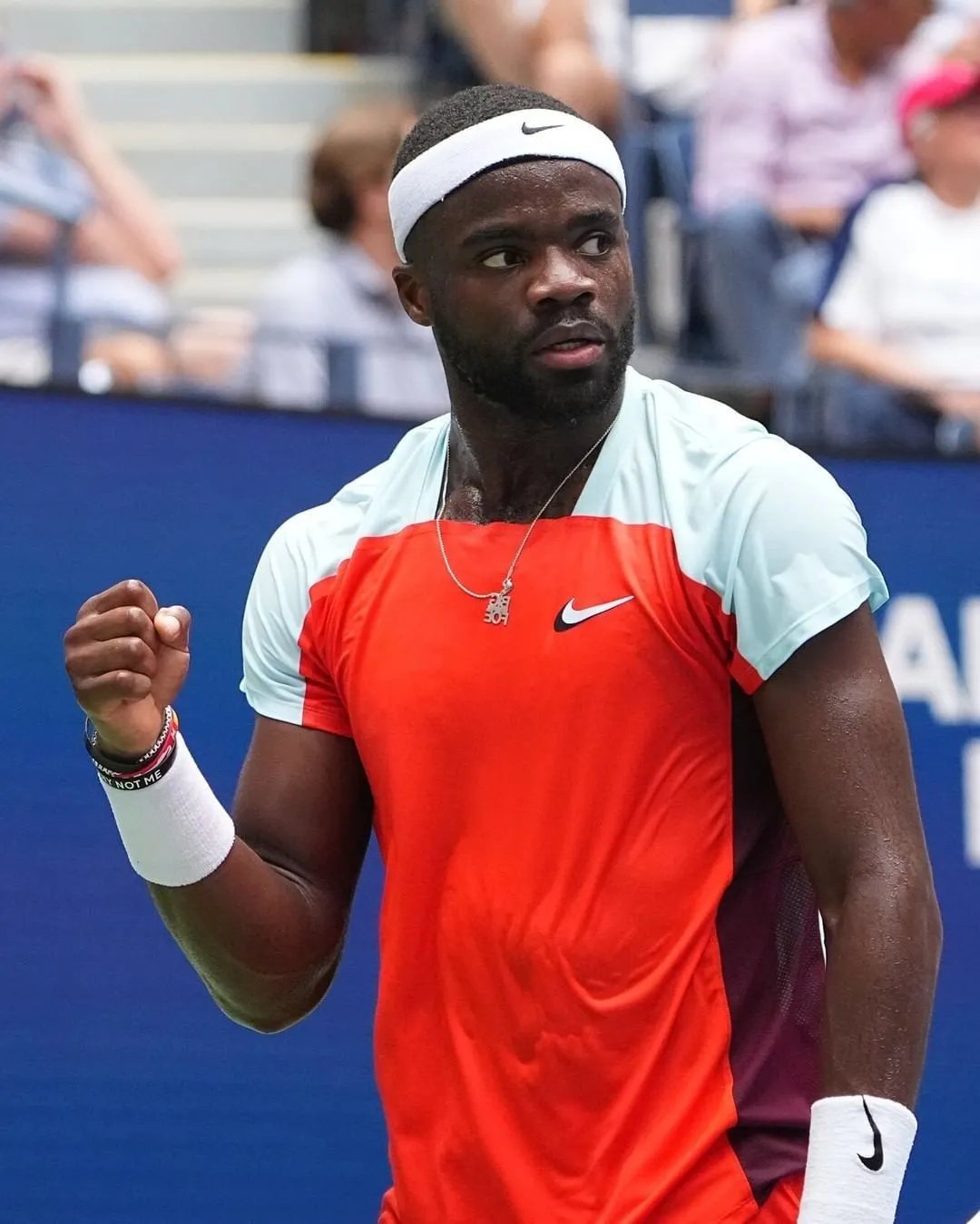
The semi-final also carried historical significance. It was the first Grand Slam semi-final contested by two Black American men. By winning, Shelton became the first Black American man to reach the US Open final since Arthur Ashe in 1972, and the first to reach any major final since MaliVai Washington at Wimbledon in 1996. Shelton spoke afterward of the emotion of the occasion, the sacrifices made by his family, and his determination to leave everything on the court in the final.
Shelton’s path to the semi-final had already included a demanding quarter-final victory over Carlos Alcaraz that stretched late into the night. His ability to recover and produce a high-level performance against Tiafoe underlined his physical resilience and growing maturity.
What the Match Revealed
The encounter highlighted the progress of American men’s tennis while also illustrating the fine margins at the top of the game. Both players possess big serves, explosive athleticism and the capacity to produce spectacular tennis. Shelton’s edge came from the consistency of his first serve, his ability to back it up with aggressive returning, and his composure in the decisive moments of the fourth set. Tiafoe’s second serve became more vulnerable as the match progressed, giving Shelton repeated opportunities to apply pressure.
For Tiafoe, the run still represented a successful tournament and a reminder of his ability to compete with the best on his preferred surface. Reaching the final four at the US Open once again reinforced his status as one of the most consistent American performers of his generation. The emotional reaction after the match reflected how much the final step means to him rather than any lack of achievement in getting that far.
Looking Ahead
Shelton now prepares for the ultimate test against Zverev, a proven champion with a strong record in major finals. A victory would mark a transformative moment for American tennis and for Shelton’s own career trajectory. For Tiafoe, the focus will shift to the remainder of the season, ranking considerations and the continued pursuit of the breakthrough that has so far remained just out of reach.
The image of Tiafoe leaving the court in tears captured the raw side of elite sport. Grand Slam semi-finals offer no consolation prizes. One player advances toward history; the other is left to process another near-miss. In this case, both the winner’s achievement and the loser’s visible disappointment underscored the stakes of the occasion. Shelton earned his place in the final through power, resilience and timely execution. Tiafoe’s tears reflected the depth of his ambition and the pain of falling short once more on the stage where he has come closest to fulfilling it.
Read more – SmallBizSeo.org