Mindfulness is the practice of paying deliberate attention to the present moment with openness and without judgment. It involves noticing thoughts, feelings, bodily sensations, and the surrounding environment as they arise, rather than becoming lost in them or reacting automatically. For beginners, mindfulness does not require long meditation sessions or special conditions. It can be cultivated through simple, repeatable actions integrated into ordinary daily life. Regular practice has been linked to reduced stress, improved emotional regulation, greater focus, and a stronger sense of calm.
Understanding Mindfulness in Practical Terms
At its core, mindfulness is about awareness rather than emptying the mind. Thoughts will continue to appear; the skill lies in observing them without immediately following or fighting them. This shift from automatic reaction to conscious observation creates space for clearer choices and reduces the intensity of stress responses. Over time, the habit of returning attention to the present strengthens mental flexibility and emotional balance.
Mindfulness is accessible because it uses ordinary experiences—breathing, walking, eating, or listening—as the foundation for practice. No special equipment or beliefs are required. The essential elements are intention, attention, and a non-judgmental attitude.
Starting with the Breath
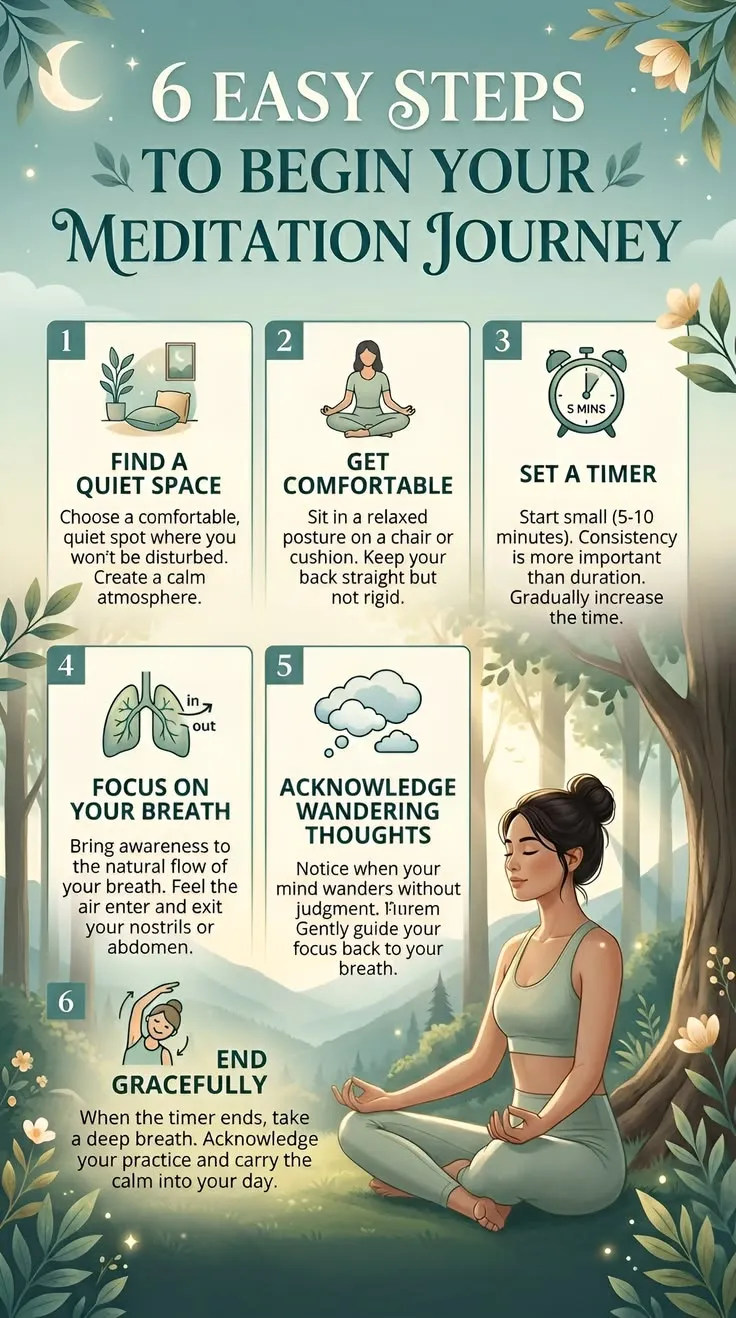
The breath provides a constant and reliable anchor. A basic exercise involves sitting or standing comfortably and bringing attention to the physical sensations of breathing—the rise and fall of the chest or abdomen, the feeling of air at the nostrils. When the mind wanders, as it inevitably will, the practice is simply to notice the distraction and gently return focus to the breath.
Even one to three minutes of this focused attention several times a day can begin to train the mind. Short sessions are often more sustainable for beginners than longer ones. Linking the practice to existing habits, such as after waking, before meals, or during a transition between tasks, increases consistency.
Expanding Awareness to the Body
A body scan involves systematically noticing sensations from head to feet or vice versa. This can be done lying down, sitting, or even briefly while standing. The aim is not to change anything but to observe areas of tension, warmth, coolness, or neutrality with curiosity. Regular body awareness helps reconnect the mind with physical experience and can reveal early signs of stress that might otherwise go unnoticed.
Simple stretches or mindful movement, performed with full attention to the sensations involved, also cultivate presence. The key is slowing down enough to feel what is happening rather than moving on autopilot.
Bringing Mindfulness into Daily Activities
Many routine actions offer natural opportunities for practice. Mindful eating involves noticing the colors, smells, textures, and tastes of food, as well as the act of chewing and swallowing. Putting aside screens and other distractions during a meal turns an ordinary activity into a grounding exercise.
Walking can become mindful by paying attention to the contact of the feet with the ground, the movement of the legs, and the surrounding sights and sounds. Even a short walk between rooms or to a vehicle can serve this purpose. Listening fully to another person without planning a response, or noticing the sensation of water during handwashing, are further examples of informal practice.
These everyday applications help mindfulness move beyond formal sitting periods and become a more continuous way of relating to experience.
Working with Thoughts and Emotions
A common misunderstanding is that mindfulness requires stopping thoughts. In reality, the mind generates thoughts continuously. The practice consists of recognizing when attention has been carried away and returning it to the chosen focus, such as the breath or present sensations. Each return strengthens the capacity for awareness.
When strong emotions arise, mindfulness encourages observing the physical and mental components of the feeling without immediate suppression or elaboration. This observational stance often reduces the emotion’s intensity and prevents automatic escalation. Over time, practitioners develop greater capacity to respond rather than react.
Building a Sustainable Daily Practice
Consistency matters more than duration. Beginning with a few minutes each day and gradually extending the time as it feels natural supports long-term adherence. Many beginners find it helpful to practice at the same time or in the same place to create a reliable cue.
Guided audio exercises can assist at the start by providing structure and reminders to return attention when it drifts. As familiarity grows, silent practice becomes more accessible. Tracking practice in a simple way, without rigid expectations, can reinforce the habit while avoiding self-criticism.
Patience is essential. The mind’s tendency to wander is normal and not a sign of failure. Each noticing and returning is the practice itself.
Common Challenges and Helpful Perspectives
Restlessness, sleepiness, or frustration frequently appear, especially early on. These states can themselves become objects of mindful observation. Adjusting posture, opening the eyes slightly, or shortening the session can help when discomfort is strong. The attitude of gentleness toward one’s experience is as important as the technique.
Progress is often subtle. Benefits such as feeling less reactive, noticing tension earlier, or experiencing brief moments of calm may appear gradually. Measuring success by the frequency of practice rather than by dramatic results helps maintain motivation.
Integrating Mindfulness into a Broader Life
Daily mindfulness supports other aspects of well-being. It can complement physical activity, improve the quality of rest, and enhance communication by fostering fuller presence with others. Because it trains attention and emotional awareness, it often makes it easier to maintain additional healthy habits.
Mindfulness is not a complete solution to every difficulty, nor does it eliminate challenges. It offers a practical way to relate to experience with greater clarity and less unnecessary struggle. By starting with the breath, extending awareness to the body and daily activities, and maintaining a patient, consistent approach, beginners can steadily develop a more mindful way of living. The cumulative effect of these small daily returns to the present moment is a measurable increase in calm, focus, and emotional balance over time.
Read more – GadgetsMonk.com