IIT Delhi has begun its first academic programme at the Sonipat campus with a specialised one-year Postgraduate Diploma in Solar Systems and Management. The international course brings together fellows from multiple countries for intensive training, a structured Europe internship and subsequent placement at Solar Technology and Application Resource Centres. The initiative marks an important expansion of the institute’s teaching activities beyond its main campus.
Launch of the First Programme at Sonipat
The inaugural batch of the Postgraduate Diploma commenced on 3 September 2026. Nine international fellows drawn from eight countries form the first cohort. The programme is offered by IIT Delhi’s Department of Energy Science and Engineering in partnership with the International Solar Alliance and the Institut National de l’Énergie Solaire of France. It is sponsored by the United Nations Industrial Development Organisation.
The launch also represents the first teaching programme with physical classes at the Sonipat campus. Institute officials have described the development as a milestone and indicated that additional programmes are planned for the site in the coming years.
Structure and Focus of the Diploma
The one-year diploma is designed as a hands-on capacity-building course. Fellows nominated by the International Solar Alliance receive training from IIT Delhi faculty, industry experts and other specialists. The curriculum concentrates on solar technology, systems and management, equipping participants with practical expertise that can be applied in diverse national contexts.
The emphasis on applied learning reflects the programme’s broader objective: to develop trainers who can support solar energy deployment across the International Solar Alliance’s extensive membership of more than 120 countries. Graduates are expected to play a multiplier role by transferring knowledge and skills within their home regions.
Europe Internship Component
Upon successful completion of the postgraduate diploma, the fellows undertake a one-month internship in Europe. This phase focuses specifically on applied solar technologies and provides exposure to advanced practices, research environments and operational projects. The European segment is intended to complement the classroom and laboratory training received at IIT Delhi with real-world international experience.
The internship forms a bridge between academic preparation and professional deployment. By immersing participants in European solar technology settings, the programme aims to broaden their technical perspective and strengthen their ability to adapt solutions to local conditions upon return.
Assignment to STAR-C Centres
After the Europe internship, the fellows are assigned to Solar Technology and Application Resource Centres in their respective countries. These centres, known as STAR-C, serve as hubs for skills development, infrastructure support and innovation in solar energy. Their purpose is to accelerate the adoption of solar technologies, build institutional capacity, generate green employment and contribute to sustainable economic growth within International Solar Alliance member nations.
By placing trained fellows directly into these centres, the programme creates a clear pathway from education to impact. The model follows a train-the-trainer approach, enabling knowledge to cascade through national institutions and local practitioners.
Strategic Significance of the Collaboration
The partnership between IIT Delhi, the International Solar Alliance and the French solar institute combines academic strength with international policy and technical networks. IIT Delhi contributes rigorous engineering education and research capability. The International Solar Alliance provides the global membership framework and the STAR-C deployment structure. The French partner adds specialised expertise in solar energy systems.
Officials associated with the programme have noted that the initiative positions IIT Delhi at the forefront of international energy education and management. It also aligns with wider efforts to expand skilled human resources for the global energy transition, particularly in countries seeking to scale solar capacity.
Role of the Sonipat Campus
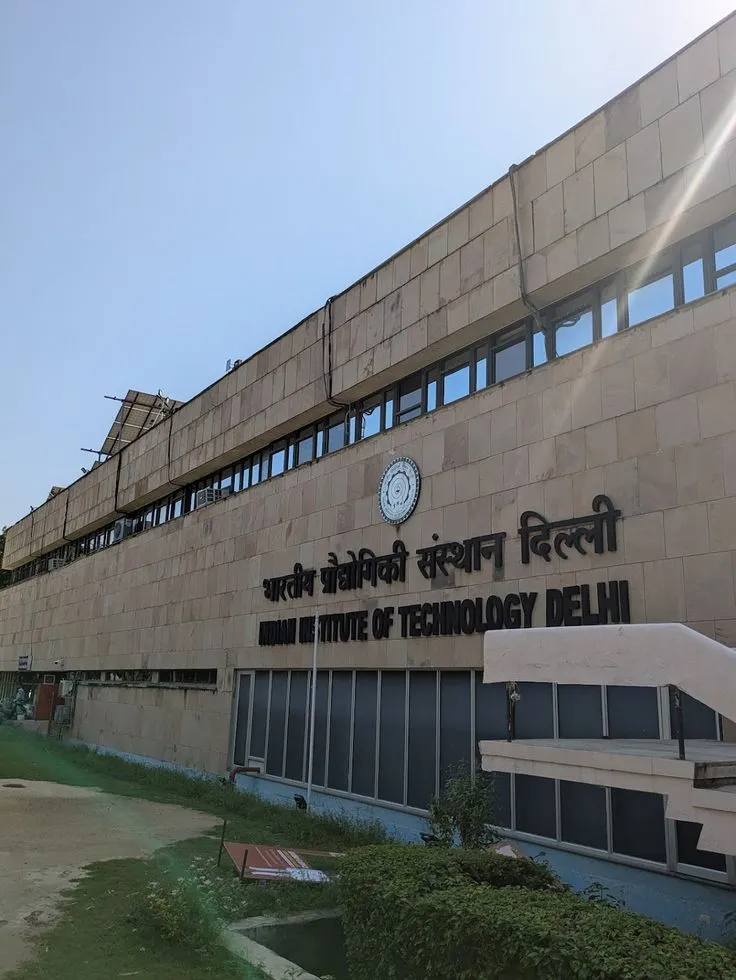
The introduction of a full academic programme at Sonipat signals the growing role of the extension campus. Previously used for various research, incubation and short-term activities, the site now hosts residential postgraduate training with an international cohort. The professor-in-charge of the Sonipat campus has highlighted the significance of beginning physical classroom teaching there and confirmed plans for further academic offerings.
This development expands IIT Delhi’s capacity to deliver specialised programmes without placing additional pressure on the main campus infrastructure. It also creates a dedicated environment suited to focused, cohort-based training in emerging technology areas.
Contribution to Global Solar Capacity Building
Solar energy deployment depends not only on technology and finance but also on the availability of trained professionals who can design, install, maintain and manage systems. By preparing international fellows to serve as trainers and resource persons within STAR-C centres, the IIT Delhi programme addresses a critical human-resource gap.
Participants return to their countries with both technical knowledge and international exposure. Their subsequent work at STAR-C centres is expected to strengthen local ecosystems, support policy implementation and accelerate practical solar projects. Over time, the cumulative effect of successive batches could contribute meaningfully to capacity building across a large number of member countries.
Looking Ahead
The first cohort’s progress through the diploma, the Europe internship and placement at STAR-C centres will be closely watched as a proof of concept. Success is likely to encourage expansion of the programme and the introduction of related courses at the Sonipat campus. Institute leaders have already signalled an intention to develop additional offerings in the years ahead.
For IIT Delhi, the solar diploma represents more than a new course. It establishes the Sonipat campus as an active teaching location, deepens collaboration with key international energy organisations, and positions the institute as a contributor to global clean-energy skill development. For the fellows, it offers a structured pathway from specialised training to practical roles that can influence solar adoption in their home countries.
The combination of rigorous academic preparation, international internship experience and direct linkage to operational resource centres gives the programme a distinctive profile. As the inaugural batch advances, it will help define how technical education institutions can support the worldwide transition to solar energy through targeted, internationally oriented capacity building.
Read more – Blessingread.com , pfptrends.com