Introduction
In personal finance, two fundamental strategies—saving and investing—often spark debate. Both involve setting money aside, yet they serve distinct purposes in achieving financial stability and growth. Saving prioritizes safety and accessibility for near-term needs, while investing focuses on long-term wealth building through potential higher returns.
Understanding the nuances helps individuals align their approach with specific goals, whether building an emergency fund, buying a home, or planning for retirement. Neither is universally “better”—the optimal choice depends on time horizon, risk tolerance, and objectives. This guide breaks down the differences, benefits, risks, and practical applications to empower informed decisions.
Defining Saving and Investing
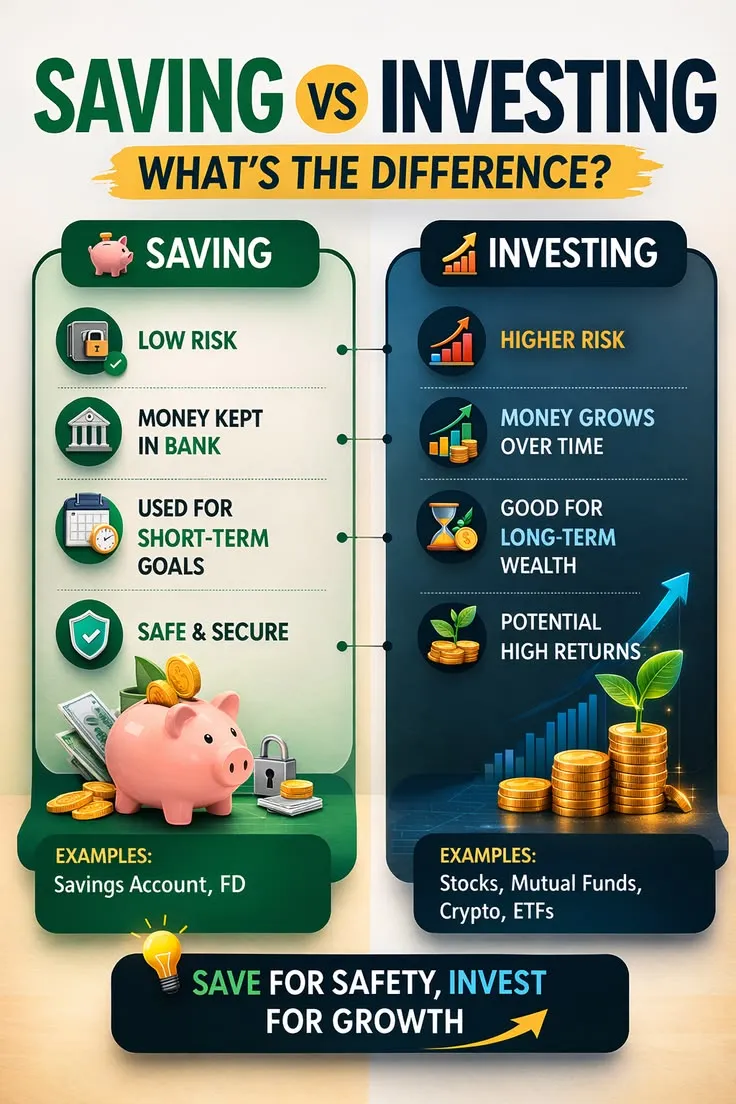
Saving means setting aside money, typically in low-risk vehicles like savings accounts, money market accounts, or certificates of deposit (CDs). The primary aim is capital preservation and liquidity for future use or emergencies. Returns come mainly from modest interest rates, offering stability with minimal volatility.
Investing involves allocating money into assets such as stocks, bonds, mutual funds, or real estate with the expectation of generating higher returns over time. It carries market risk but leverages opportunities for growth through capital appreciation, dividends, and compounding.
The core distinction lies in risk versus reward and time commitment. Saving protects principal; investing seeks to multiply it.
Key Differences: Risk, Return, Liquidity, and Time Horizon
Risk stands out as the most significant differentiator. Savings accounts, often FDIC-insured up to certain limits, carry very low risk of losing principal. Investing exposes funds to market fluctuations, where values can decline during downturns.
Returns differ markedly. Savings accounts provide predictable but lower yields, which may struggle against inflation over long periods. Investments, particularly equities, have historically delivered higher average returns—often outpacing inflation—though results vary and are not guaranteed.
Liquidity favors saving: funds are easily accessible without penalties in most cases. Investments may involve selling assets, potential fees, or market timing considerations, making them less ideal for immediate needs.
Time horizon guides the choice. Short-term goals (under 3 years) suit saving to avoid market volatility. Long-term goals (5+ years) benefit from investing to harness growth potential.
Inflation poses a silent risk to savers, as low returns might erode purchasing power. Investors aim to combat this through asset growth.
The Power of Compounding in Investing
Compounding is a key advantage of investing. Earnings generate further earnings over time. For example, consistent contributions to growth-oriented assets can significantly multiply wealth across decades, far surpassing simple savings interest.
A modest annual return in a diversified portfolio, reinvested, creates exponential growth—ideal for retirement or education funds. Savings accounts offer limited compounding at lower rates.
Benefits and Risks of Saving
Benefits:
- High safety and peace of mind.
- Immediate access for emergencies or planned expenses.
- Predictable growth without market stress.
- Simplicity for beginners or conservative individuals.
Risks:
- Lower returns that may not beat inflation.
- Opportunity cost of missing higher growth.
- Interest rate variability in some accounts.
Saving excels for emergency funds (typically 3-6 months of living expenses) and short-term objectives like vacations or down payments.
Benefits and Risks of Investing
Benefits:
- Potential for substantial long-term growth.
- Compounding accelerates wealth accumulation.
- Diversification can manage risk while targeting inflation-beating returns.
- Tax advantages in certain accounts (e.g., retirement plans).
Risks:
- Possibility of principal loss during market declines.
- Volatility affecting short-term needs.
- Requires knowledge or professional guidance.
- Fees and emotional challenges during downturns.
Diversified, long-term strategies historically reward patient investors, with broad market indices showing strong average performance over decades despite periodic corrections.
When to Save, When to Invest, or Both?
The “best” strategy combines both in a balanced approach.
- Prioritize Saving If: You need funds soon, have high risk aversion, or lack an emergency cushion. Build security first.
- Embrace Investing If: Your goals are years away, you can tolerate fluctuations, and you seek growth. Start after securing basics.
Many experts recommend the 50/30/20 budgeting rule or similar: allocate a portion to needs, wants, and savings/investing (20%). Aim for an emergency fund in savings, then direct surplus toward investments.
Consider personal factors: age, income stability, debt levels, and goals. Younger individuals with time on their side can afford more investing aggression. Those nearing retirement may shift toward preservation.
Practical Strategies for Success
- Assess Your Situation: Calculate net worth, list goals with timelines, and evaluate risk tolerance.
- Build Foundations: Establish an emergency fund in a high-yield savings account. Pay down high-interest debt.
- Automate Habits: Set up automatic transfers to savings and investment accounts.
- Diversify Investments: Use index funds, ETFs, or balanced portfolios to spread risk.
- Monitor and Adjust: Review progress annually, rebalance as needed, and stay informed without emotional reactions to market news.
- Seek Professional Advice: Consult advisors for personalized plans, especially with complex goals or large sums.
Education reduces intimidation—start small with low-cost options and consistent contributions.
Common Myths Debunked
- “Saving is always safer”: True for short-term, but long-term inflation risk is real.
- “Investing is only for the wealthy”: Accessible via micro-investing apps and retirement plans.
- “You must time the market”: Consistent, long-term investing (dollar-cost averaging) often outperforms attempts at perfect timing.
- “All debt is bad”: Strategic use (e.g., mortgages) differs from high-interest consumer debt.
Conclusion
Saving and investing are complementary tools, not competitors. Saving provides the secure base for financial resilience, while investing fuels progress toward ambitious goals. The right mix depends on aligning strategies with your unique timeline, risk profile, and aspirations.
By starting with saving for protection and gradually incorporating investing for growth, most people can build lasting wealth. Take the first step today—review your finances, set clear goals, and commit to consistent action. Informed choices today pave the way for greater security and freedom tomorrow.