Deciding between saving and investing is one of the most important personal finance choices people face. Both play essential roles in building financial security, yet they serve different purposes, carry different levels of risk, and suit different time horizons. Understanding the distinctions helps individuals allocate money wisely, protect against emergencies, and grow wealth for longer-term goals.
What Saving Really Means
Saving involves setting money aside in accounts designed for safety and easy access. Common options include traditional savings accounts, high-yield savings accounts, money market accounts, and certificates of deposit. These vehicles prioritize principal protection. In the United States, deposits at insured banks are protected by the Federal Deposit Insurance Corporation up to $250,000 per depositor, per ownership category, at each insured institution.
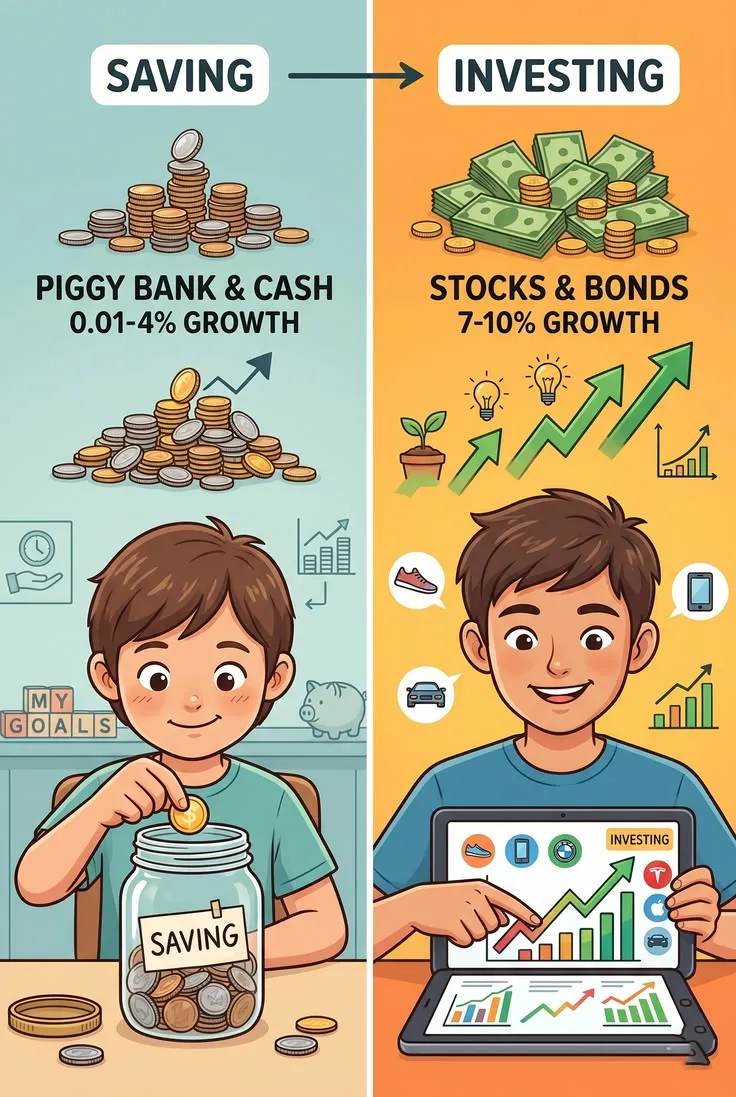
Returns on savings are generally modest. National average rates on standard savings accounts often sit well below one percent, though competitive high-yield accounts can offer noticeably higher yields that sometimes keep pace with or exceed short-term inflation. The primary advantages are liquidity and stability. Money can usually be withdrawn quickly without market-related losses or significant penalties, making savings ideal for funds that may be needed soon.
What Investing Involves
Investing means putting money into assets such as stocks, bonds, mutual funds, exchange-traded funds, or real estate with the expectation of generating higher returns over time. Unlike savings, investments carry the risk of losing value in the short term because market prices fluctuate.
Historically, a diversified portfolio of U.S. stocks, often measured by broad indexes, has delivered average annual returns around 10 percent over long periods before inflation. After adjusting for inflation, real returns have typically been lower but still substantially higher than those available from savings accounts. Compounding amplifies these gains: earnings generate their own earnings, creating accelerating growth when money remains invested for many years.
The trade-off is volatility. Values can drop significantly during market downturns, and recovery can take time. Investing is therefore best suited for goals that are several years or decades away.
Key Differences That Guide Decisions
Risk and return form the core contrast. Savings offer low risk and correspondingly low returns. Investing accepts higher risk in pursuit of higher potential growth. Liquidity also differs: savings provide near-immediate access, while selling investments may involve timing considerations, transaction costs, or tax implications.
Time horizon is critical. Money needed within one to three years generally belongs in savings to avoid the possibility of selling investments at a loss. Goals five years or longer, such as retirement or a distant home purchase, often benefit from investing so that compounding and market growth can work.
Inflation affects both approaches. When savings yields lag inflation, purchasing power slowly erodes. Investments have historically outpaced inflation over extended periods, helping preserve and increase real wealth.
When Saving Should Take Priority
An emergency fund is the foundation of sound financial planning. Experts commonly recommend setting aside three to six months of essential living expenses in a liquid, low-risk account. This buffer covers unexpected costs such as medical bills, car repairs, or temporary income loss without forcing the sale of investments or reliance on high-interest debt.
Short-term goals also belong in savings. Examples include a vacation planned within the next year or two, a vehicle down payment needed soon, or upcoming known expenses. Building this cash reserve first reduces financial stress and provides flexibility.
Many people begin with a modest target, such as one thousand dollars or one month of expenses, then expand the fund gradually. Automating transfers into a dedicated high-yield savings account makes the process consistent and less dependent on willpower.
When Investing Makes Sense
Once an adequate emergency fund exists and high-interest debt is under control, additional money can be directed toward investments. Long-term objectives such as retirement, children’s education many years away, or building substantial wealth benefit from the growth potential of markets.
Employer-sponsored retirement plans often provide matching contributions, which represent an immediate return. Contributing enough to capture the full match is widely regarded as a high-priority step. Tax-advantaged accounts further enhance growth by deferring or reducing taxes on earnings.
Diversification across different asset types helps manage risk. Starting early maximizes the power of compounding, because even modest regular contributions can grow significantly over decades.
Finding the Right Balance
Most people need both saving and investing working together. A practical sequence is to establish the emergency fund in accessible savings, pay down costly debt, then begin investing for longer horizons while continuing to save for nearer-term needs.
Regular review keeps the mix appropriate. Life changes—such as a new job, marriage, children, or approaching retirement—may require shifting more money toward safety or allowing greater exposure to growth assets. Risk tolerance also matters: individuals who lose sleep over market declines may prefer a more conservative allocation even for long-term money.
Practical Steps for Smart Decisions
Track monthly income and expenses to identify how much can be directed toward savings and investments. Automate contributions so money moves before it can be spent. Choose accounts that match the purpose: high-yield savings or money market accounts for emergency and short-term funds, and diversified low-cost investment vehicles for long-term growth.
Educate yourself on basic concepts such as asset allocation and the impact of fees. Avoid reacting to short-term market headlines. Consistency over years produces better results than attempting to time perfect entry and exit points.
Making the Choice That Fits Your Life
Saving and investing are complementary tools rather than opposing strategies. Savings provide security and flexibility for the present and near future. Investing offers the opportunity to grow purchasing power and achieve larger goals over time. By matching each dollar to its intended purpose and time frame, individuals create a resilient financial foundation that supports both stability today and opportunity tomorrow. The smartest approach is rarely all one or the other—it is the thoughtful combination that aligns with personal circumstances, goals, and comfort with risk.
Read more – wasatchglobal.com