Sunny Deol has urged audiences to approach Batwara 1947 without preconceived political notions. Speaking alongside director Rajkumar Santoshi, the actor described the film as a story centred on the human cost of Partition rather than an attempt to deliver a political message. Both have emphasised that the narrative focuses on families, emotions and ordinary people caught in one of the subcontinent’s most traumatic chapters, and they hope viewers will connect with those experiences rather than filter the film through contemporary debates.
A Story of Ordinary Lives
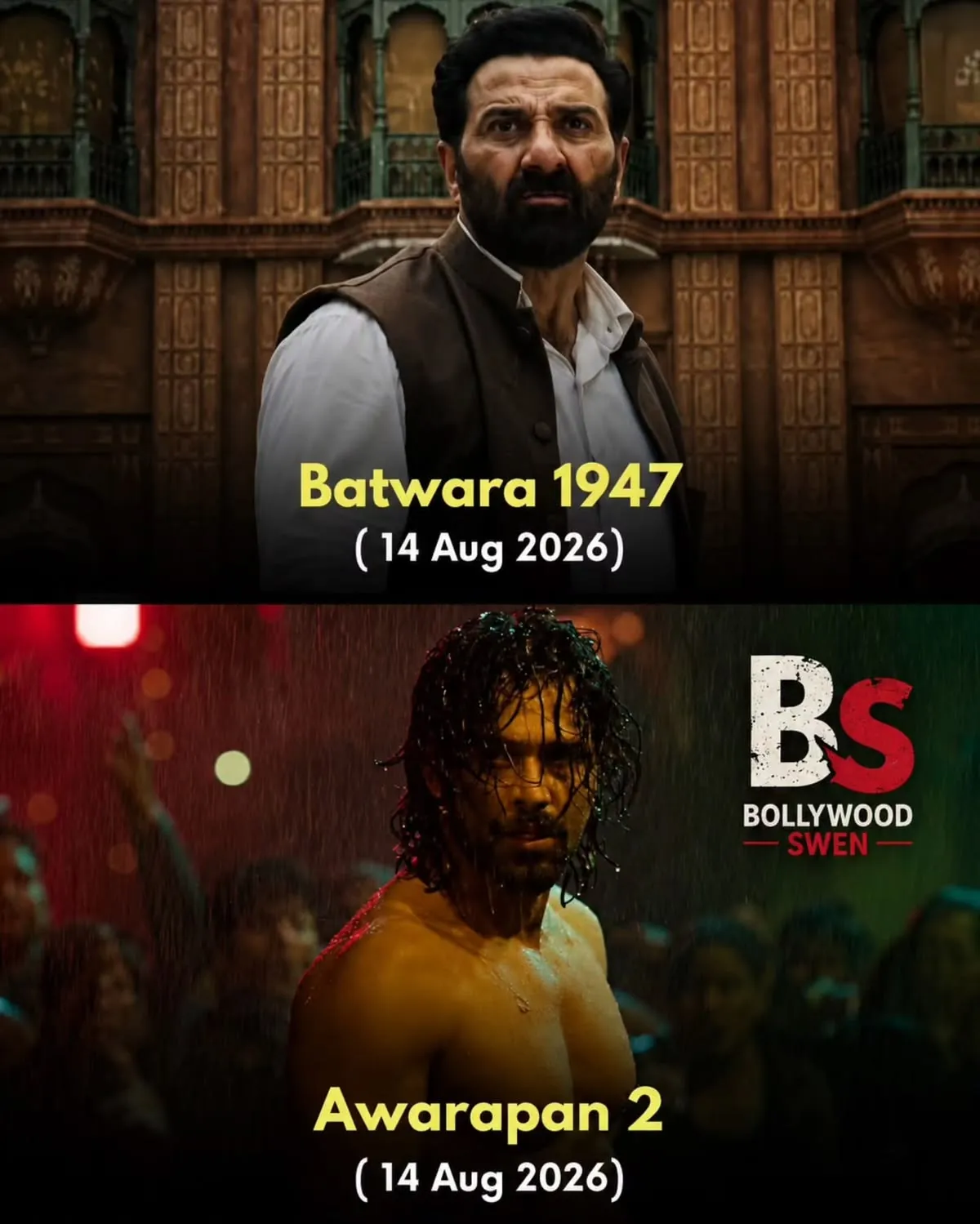
Batwara 1947, directed by Rajkumar Santoshi and produced by Aamir Khan, is set against the backdrop of the 1947 Partition. The film follows families uprooted by the division of Punjab and the violence that accompanied it. According to the makers, the emphasis remains on personal loss, displacement, courage and the bonds that survive even when communities are torn apart.
Deol has said the characters appear on screen exactly as they were written. The team did not attempt to neutralise elements of the story or reshape it to fit the present political climate. “This is the story we’re telling,” he stated. “We were never trying to neutralise anything or shape it according to the current climate. It is simply the story as it is.” His hope is that once audiences enter the world of the film, discussions about religion or politics will recede, replaced by an understanding of what Partition meant for those who lived through it.
The Director’s Perspective
Rajkumar Santoshi has echoed the same position. He described Batwara 1947 as first and foremost an emotional story. When viewers become absorbed in the characters’ journeys, he suggested, they stop categorising people as Hindu or Muslim and begin to see them as human beings facing impossible circumstances. The film, in his view, is not designed to teach a lesson or advance an argument. Its strength lies in the emotional truth of the situations it portrays.
This approach aligns with the source material. The film draws from Asghar Wajahat’s acclaimed play, which examines life in Lahore during the upheaval of Partition. By rooting the adaptation in a dramatic work focused on human relationships rather than political chronology, the makers have signalled their intention to stay with personal experience.
Humanity Above Division
In promotional conversations, Deol has repeatedly returned to the idea that the greatest tragedy of Partition was the suffering of innocent people. “The most heartbreaking thing is that it should never have happened because innocent people are the ones who suffer. It is always innocent people who pay the price,” he has said. He has also spoken of the mother figure as central to the film’s emotional core, describing a mother’s love as a force that transcends religious identity.
These themes surface in the film’s imagery and dialogue. Trailers and early descriptions show a family forced to migrate, an elderly woman who refuses to abandon her home, and acts of protection that cross communal lines. One of the more widely noted lines asserts that a child’s first religion is the mother and that a mother should not be divided into Hindu or Muslim. Such moments underline the makers’ stated desire to keep humanity at the centre of the narrative.
Avoiding the Political Frame
Partition stories in Indian cinema have often been received through political lenses. Audiences and commentators sometimes look for alignment with contemporary positions on nationalism, secularism or bilateral relations. Deol and Santoshi have asked viewers to set those expectations aside. Deol has noted that the project was first discussed years earlier and was not conceived in response to today’s atmosphere. The intention, he said, was simply to tell a story that had stayed with them.
Santoshi has reinforced that the film was not made to send a message to any particular audience or to score points in current debates. By insisting on the primacy of emotion and character, the director and lead actor are attempting to create space for the film to be experienced on its own terms.
Personal Resonance
Deol has linked the subject to family memory. He grew up hearing Partition stories from his grandparents—accounts that mixed fear with instances of people helping one another across community lines. Those recollections, he has said, remained with him and informed his understanding of the period. Bringing such material to the screen carries a responsibility to honour the human dimension rather than reduce it to slogans.
The cast reflects that ambition. Alongside Deol, the film features Preity Zinta, Shabana Azmi, Karan Deol and others. The presence of performers associated with different eras and styles of Hindi cinema suggests an attempt to give the story both emotional weight and contemporary reach.
An Invitation to Audiences
By asking viewers to watch Batwara 1947 without bias, Deol and Santoshi are making a claim about the purpose of historical drama. They present the film as an invitation to inhabit the experiences of people who lived through forced migration, violence and the sudden redrawing of borders. In their telling, the value of the work lies in the recognition of shared vulnerability and the capacity for compassion under extreme pressure.
Whether audiences accept that invitation will become clear once the film reaches theatres. For now, the makers have drawn a clear line: Batwara 1947 is offered as a human story first. Politics, they insist, was never the point. The hope is that the emotions on screen will prove strong enough to make the distinction self-evident.
Read more – situsmerahtoto.info