Long hours spent sitting at a desk can lead to stiff necks, tight hips, rounded shoulders, lower-back discomfort, and reduced energy. Office workers who also work from home often face the same challenges without the natural movement that comes from commuting or walking between meetings. Simple, equipment-free exercises performed at home can counteract many of these effects. Regular short sessions improve circulation, ease muscle tension, support better posture, and contribute to overall physical activity goals. This guide outlines practical exercises and habits that fit easily into a busy schedule.
Why Movement Matters for Desk-Based Work
Prolonged sitting keeps the hip flexors in a shortened position, weakens the glutes, and encourages a forward head and rounded shoulder posture. Over time these patterns contribute to discomfort and reduced mobility. Research and public health guidance emphasize breaking up long periods of inactivity. Standing or moving for a few minutes every half hour to an hour helps restore blood flow and reduces stiffness. Combining these micro-breaks with targeted stretches and strength moves produces noticeable improvements in how the body feels during and after the workday.
Building a Sustainable Routine
Effective home exercise for office workers does not require long workouts. Aim for brief movement breaks throughout the day plus one or two slightly longer sessions of 10 to 20 minutes. Consistency matters more than intensity. Set reminders to stand, stretch, or walk briefly. Perform exercises with controlled movements and stop if any sharp pain occurs. Those with existing injuries or medical conditions should consult a healthcare professional before beginning.
Neck and Shoulder Relief
Forward head posture and elevated shoulders are common after hours at a screen. Gentle neck tilts help: slowly lower one ear toward the same-side shoulder, hold briefly, and switch sides. Chin tucks strengthen the deep neck muscles—draw the chin straight back as if making a double chin while keeping the gaze level. Shoulder rolls, performed both forward and backward, release upper-back and shoulder tension. Clasping the hands behind the back and gently opening the chest reverses the rounded posture that develops while typing.
Upper-Back and Chest Mobility
Cat-cow movements or simple seated spinal extensions encourage the mid-back to move in the opposite direction of a habitual slump. Standing tall and interlacing the fingers behind the head while opening the elbows wide stretches the chest and front of the shoulders. Wall angels—standing with the back against a wall and sliding the arms upward while keeping contact—promote scapular mobility and postural awareness.
Hip and Lower-Body Activation
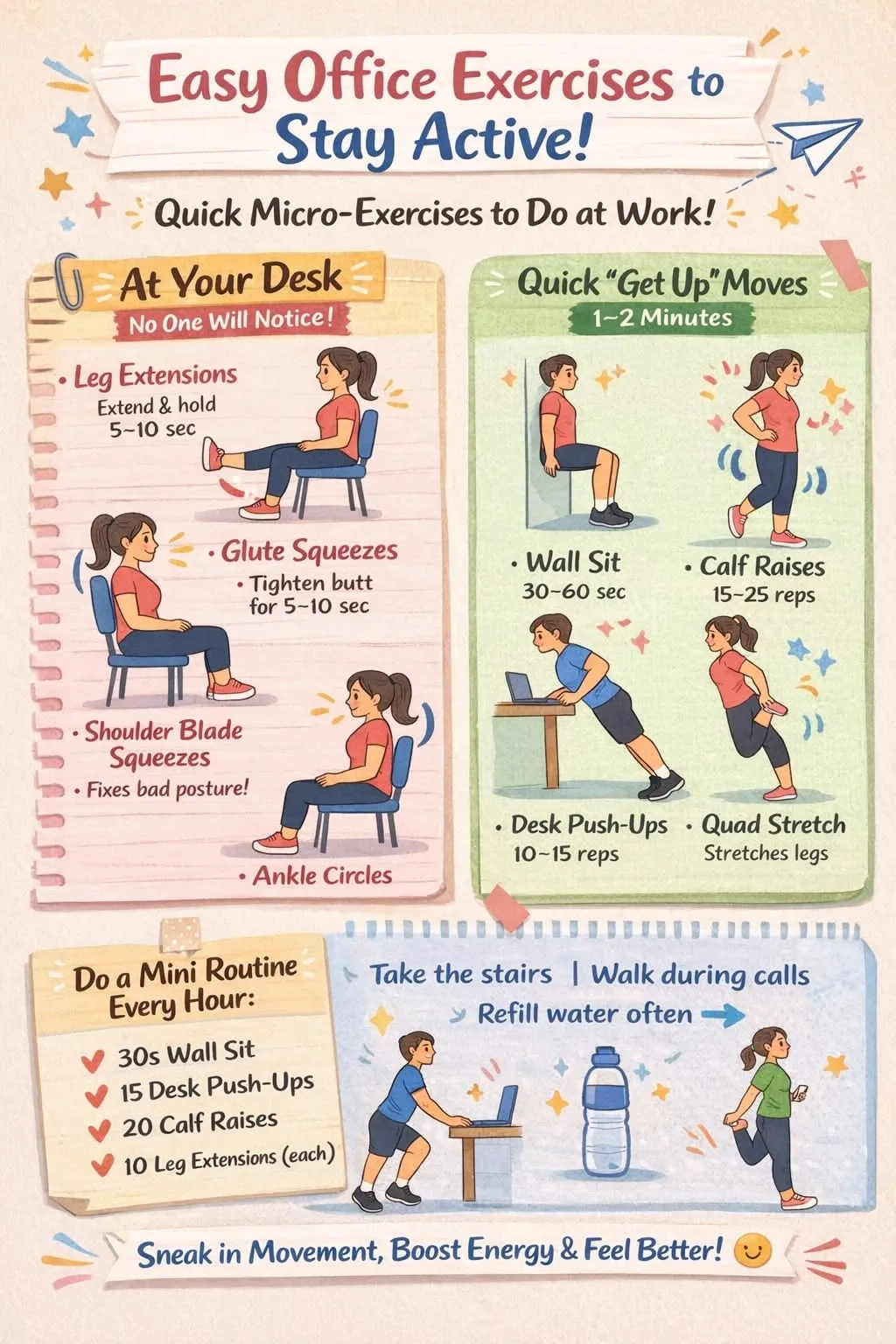
Sitting shortens the hip flexors and reduces glute engagement. A standing hip flexor stretch—one foot forward in a gentle lunge position with the back knee lowered slightly—lengthens the front of the hip. Glute bridges, performed lying on the back with knees bent and feet flat, activate the posterior chain: lift the hips, squeeze the glutes at the top, and lower with control. Bodyweight squats or sit-to-stands from a chair strengthen the legs and encourage hip mobility. Calf raises improve lower-leg circulation and can be done while waiting for the kettle to boil or during phone calls.
Core and Spinal Stability
A strong, stable core supports the spine during long sitting periods. Dead bugs—lying on the back and slowly extending opposite arm and leg while keeping the lower back gently pressed toward the floor—train control without strain. Bird-dog exercises from a hands-and-knees position similarly challenge balance and core endurance. Seated or standing marches raise the heart rate slightly and engage the midsection.
Full-Body Options Requiring Minimal Space
Wall push-ups build upper-body strength using only body weight and a wall. Standing or supported lunges work the legs and improve single-leg stability. A short sequence that combines squats, glute bridges, wall push-ups, and a plank hold (on the floor or against a counter) creates an efficient mini-circuit. Walking around the home or climbing stairs for a few minutes between meetings adds low-impact cardiovascular movement.
Sample Daily Structure
Begin the day with two to three minutes of neck, shoulder, and hip openers. During work hours, stand and move for one to two minutes every 30 to 60 minutes—shoulder rolls, chin tucks, or a short walk are sufficient. At lunch or after work, complete a 10- to 15-minute routine that includes glute bridges, squats or sit-to-stands, a chest opener, and a gentle spinal movement. Evening can include light stretching or a short walk to further offset accumulated sitting.
Additional Supportive Habits
Pair exercises with posture awareness. Keep the screen at eye level, feet supported, and shoulders relaxed. Use a timer or calendar alerts to enforce movement breaks. Alternate sitting and standing when possible. Even small increases in daily steps contribute to the recommended weekly total of moderate activity. Hydration and brief outdoor time, when feasible, further support energy and recovery.
Progress and Safety
Start with fewer repetitions and shorter holds, then gradually increase as comfort improves. Focus on quality of movement rather than speed or quantity. Discomfort from muscle fatigue is different from joint pain; the latter warrants stopping and, if persistent, professional advice. Over weeks of consistent practice, many people notice reduced end-of-day stiffness, easier upright posture, and improved concentration.
Simple home exercises give office workers an accessible way to counteract the physical effects of prolonged sitting. By combining frequent micro-breaks with targeted stretches and strength movements for the neck, shoulders, hips, and core, it is possible to protect mobility, reduce discomfort, and support long-term musculoskeletal health—all without leaving home or needing specialized equipment. The most effective program is the one performed regularly.
Read more – casinopeers.com